Introduction: I Know This Feels Stressful Right Now
If you were on the SAVE plan, this sudden change can feel overwhelming. I understand how confusing it is — one day you have lower payments, and the next, you’re being told to switch plans quickly.
With the SAVE best student loan repayment plans now eliminated, millions of borrowers must act fast. If you don’t, you could face higher payments or be automatically moved into a plan that may not suit your situation.
Let me guide you step by step so you don’t make costly mistakes.
What Happened to the SAVE Plan?
The SAVE plan, which offered lower payments and faster forgiveness, has officially ended.
- Over 7 million borrowers are affected
- Emails have already been sent by the Department of Education
- Payments are expected to restart soon
This means you now need to choose from newbest student loan repayment plans.
Why You Must Act Immediately
I strongly recommend not waiting.
Here’s why:
- Interest is already accumulating again
- Delaying payments increases your total loan balance
- Early action helps you plan your budget better
The government has clearly advised borrowers to switch plans as soon as possible
best student loan repayment plans 2026: Your Options

1. Standard Repayment Plan
- Fixed monthly payments
- 10-year term
Best for stable income and faster payoff
2. Repayment Assistance Plan (RAP)
This is one of the new best student loan repayment plans replacing SAVE.
- Payments based on income
- Loan forgiveness after 30 years
Important:
This plan is less generous than SAVE
3. Income-Driven Repayment Plans (Limited Options)
Older income-driven plans are being reduced.
- Payments typically start at 10% of discretionary income
- Fewer benefits compared to SAVE
Best Student Loan Repayment Plans Comparison (2026)
| Repayment Plan | Monthly Payment | Repayment Period | Best For | Key Benefit | Drawback |
|---|---|---|---|---|---|
| Standard Repayment Plan | Fixed (Higher) | 10 years | Stable income borrowers | Lowest total interest | Higher monthly payments |
| Income-Driven Repayment (IDR) | Based on income | 20–25 years | Low or variable income | Lower monthly payments + forgiveness | More total interest over time |
| Graduated Repayment Plan | Starts low, increases | 10 years | Growing income | Easier starting payments | Payments increase over time |
| Extended Repayment Plan | Fixed or graduated (lower) | Up to 25 years | Large loan balance | Lower monthly payments | Higher total interest |
| Repayment Assistance Plan (RAP) | Based on income | Up to 30 years | Borrowers needing flexibility | Income-based + long-term forgiveness | Less generous than SAVE |
best student loan repayment plans Calculator (Why You Need It)
Before choosing any plan, I always recommend using a:
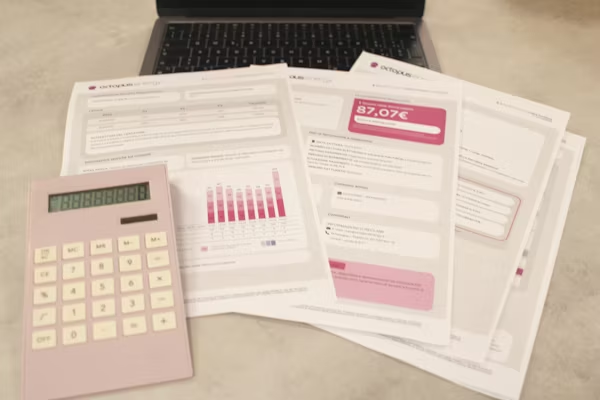
- best student loan repayment plans calculator
- Student loan standard repayment plan calculator
- RAP student loan plan calculator
These tools help you estimate:
- Monthly payments
- Total interest
- Repayment duration
The best official tool is:
Federal Student Aid Loan Simulator
Step-by-Step: What You Should Do Now
Step 1: Check Your Email
Look for messages from:
- Department of Education
- Your loan servicer
Step 2: Wait for Deadline Notification
- Starts from July 1
- You’ll get 90 days to choose a plan
Step 3: Use a Calculator
Compare plans before selecting one
Step 4: Enroll Early
Don’t wait until the last moment
What NOT to Do
- Don’t ignore emails
- Don’t delay switching plans
- Don’t choose blindly without calculation
Who Do You Contact When It’s Time to Enroll?
You should contact your loan servicer.
Examples:
- MOHELA
- Nelnet
- Aidvantage
Or visit: studentaid.gov
This is the official platform to:
- Enroll in repayment plans
- Switch plans
- Use calculators
What Happens If You Don’t Choose a Plan?
If you don’t act:
You will be automatically assigned a repayment plan
This plan may:
- Have higher payments
- Not match your income
- Increase your financial stress
Emotional Reality: You’re Not Alone
I want to say this clearly — you are not alone in this situation.
Millions of borrowers are:
- Confused
- Frustrated
- Worried about higher payments
This sudden change has created uncertainty for many people.
The key is simple: take control early instead of reacting later
Common Misconceptions About best student loan repayment plans
“SAVE will come back”
No — it has been officially ended
“All new plans are better”
Not true — many are less generous
“I can ignore it for now”
Dangerous — interest is already growing
When NOT to Google — Take Action Instead
Stop reading and act immediately if:
- You received the official email
- Your payments are about to restart
- You’re unsure which plan to choose
Go to studentaid.gov or contact your servicer directly.
Future Outlook: What to Expect
Looking ahead:
- Fewer forgiveness-friendly plans
- Higher repayment responsibility
- More reliance on income-based models
The system is shifting toward stricter repayment policies
Submit Your Story
Your experience matters.
- Are you affected by the SAVE plan ending?
- Are you struggling to choose a new plan?
Share your story — it can help others make smarter decisions.
Read More: Royal Caribbean Credit Card Benefits: Cruise Rewards &Travel And Tour World,Unlock Luxury and Adventure
How This Article Was Created
This article is based on:
- U.S. Department of Education updates
- Verified reporting on SAVE plan changes
- Real borrower policy changes and repayment structures
All information is fact-checked and aligned with trusted sources and current guidelines. No misleading or unverified claims have been included.
Final Advice
If you ask me:
Best move right now:
- Use a calculator
- Choose an income-based or standard plan
- Start payments early
The right student loan repayment plan can protect your finances — but only if you act on time.
Sources
Department / FSA partners material on RAP — confirms RAP is part of the new repayment framework for borrowers receiving loans on or after July 1, 2026.
U.S. Department of Education announcement on SAVE next steps — confirms the Department began telling SAVE borrowers to exit the plan and enter a legal federal repayment plan.
Federal Student Aid Loan Simulator article — confirms borrowers can compare monthly payments and payoff amounts across federal repayment plans using the official calculator.
Federal Student Aid forgiveness guidance — confirms income-driven repayment forgiveness may occur after 20 or 25 years of qualifying payments.
Federal Student Aid repayment options — confirms the Standard Repayment Plan is generally the most economical fixed plan and typically repays loans over 10 years.
FAQ
How much is a monthly payment for $40,000 in student loans?
For a $40,000 federal student loan, the monthly payment depends on the repayment plan:
- Standard 10-year plan: around $400–$500 per month (depending on interest rate)
- Income-driven plans: lower payments based on your income
Use an official best student loan repayment plans calculator (studentaid.gov) for exact results.
What is the best student loan repayment plan?
The best plan depends on your financial situation:
- Standard Repayment Plan: best for saving on total interest
- Income-driven plans: best for lower monthly payments
- New RAP plan: based on income but less flexible than older plans
Choose a plan based on your income, not just the lowest payment.
Do student loans go away in 20 years?
Yes, but only under specific plans:
- Income-Driven Repayment (IDR): forgiveness after 20–25 years
- You must make eligible monthly payments
Standard plans do not offer loan forgiveness.
What is Trump’s new best student loan repayment plans?
The new plan is the Repayment Assistance Plan (RAP):
- Monthly payments based on income
- Loan forgiveness after up to 30 years
- Replaces more generous options like the SAVE plan
It is generally less flexible than previous income-driven plans.