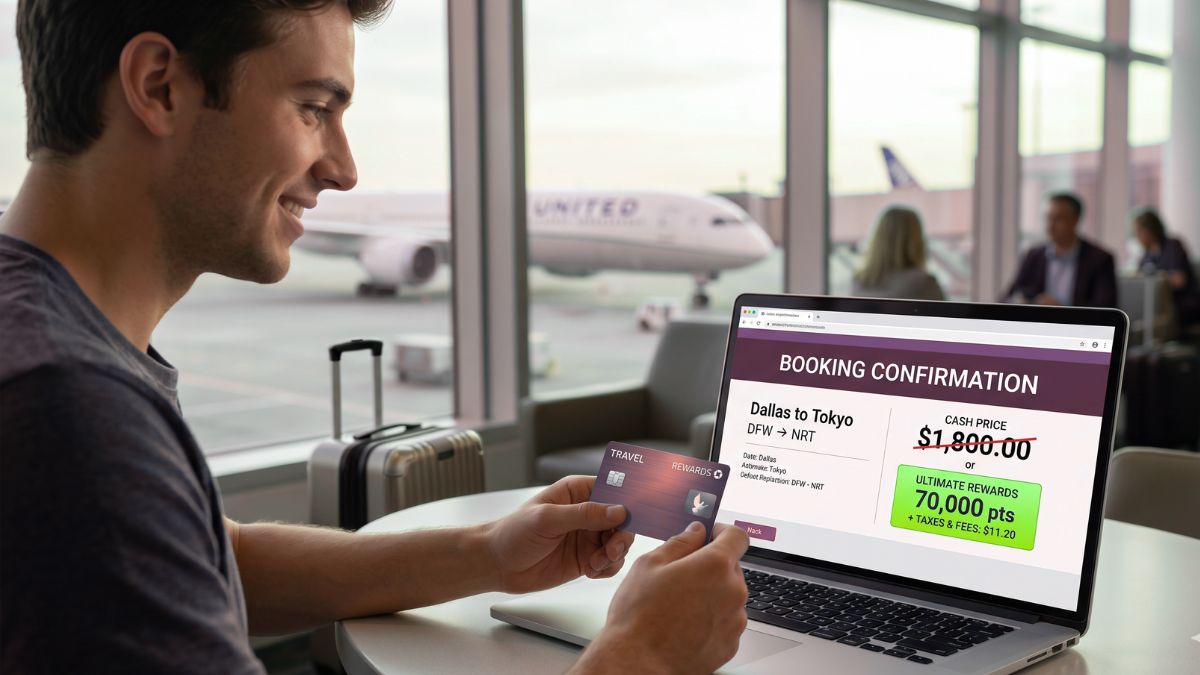
I remember booking a flight to Tokyo in 2024. The cash price sat right at $1,800. I paid $11.20 in taxes and used 70,000 airline miles. That exact math is how credit card rewards help travelers fly for practically pennies.
You buy groceries. You pay your electric bill. The bank kicks back a percentage in a fictional currency. You then trade that currency for seats on a plane or nights in a hotel.
It sounds like a scam. Banks absolutely make billions off swipe fees and interest. But if you pay your statement in full every 30 days, you get to extract free flights from their system.
A standard travel card gives you 2 points per dollar spent on dining. You spend $500 on tacos and coffee over a month. You earn 1,000 points.
The real trick happens when you get a sign-up bonus. Banks offer massive bounties to acquire new customers. You might see a bonus for 60,000 points after spending $4,000 in the first 3 months. Those 60,000 points are usually enough for a round-trip flight to Europe in economy.
Airlines actually make more money selling AAdvantage miles to banks than they do flying airplanes. You are participating in a massive financial game. The airlines want to fill empty seats. Banks want you to swipe their plastic.
You can use this system for domestic economy flights or international first class. A round-trip flight from Dallas to Chicago might cost 15,000 points. A one-way ticket to London in a lie-flat seat could cost 60,000 points. The math changes based entirely on how you redeem them.
How do travel credit cards work?
I spend too much time reading financial forums. If you type “how do travel credit cards work on Reddit” into a search bar, you’ll find a massive community of optimizers. They approach credit card points with the same dedication as a second job.
The consensus there is clear. Travel cards work by transferring your flexible bank points to specific airline or hotel partners. You move your Chase points directly to Hyatt or United. That is where the math works in your favor.
A hotel room might cost $300 a night. Hyatt might charge 12,000 points for that same room. You divide 300 by 12,000. You get 2.5 cents per point. Most cash-back cards only give you 1 cent per point. The Reddit crowds obsess over getting 4 or 5 cents per point by booking international business class flights.
Subreddits like r/awardtravel are goldmines for specific booking strategies. People post their exact routes, airlines, and point totals. You can read hundreds of trip reports detailing exactly how someone booked a honeymoon to the Maldives using points.
The community is brutally honest. They will tell you when redemption is garbage. Using points to buy merchandise or gift cards usually yields half a cent per point. They will roast anyone who uses 100,000 Chase points to buy an iPad. You are throwing away thousands of dollars in free travel.
They also constantly repeat one rule. Never pay interest. An average card charges 24% APR. A travel reward might give you a 2% return on your spending. If you carry a balance, the math becomes immediately flawed.
When to get a travel credit card
Timing your application requires a bit of planning. The primary consideration for determining when to obtain a travel credit card is your anticipated expenses. You need to hit that minimum spend requirement for the sign-up bonus.
Maybe your car needs a $2,000 repair. Or you are paying for a wedding venue. Consider transferring those significant, planned expenses to a new card. You clear the bonus threshold in a single day.
I think many people mess up by applying for cards impulsively. You see an ad in an airport terminal and sign up. Airport offers rarely match the highest online bonuses.
Check your calendar. Are you moving soon? Buying furniture? Those moments are perfect for a new card. You organically hit the $4,000 or $5,000 spending requirement without buying things you don’t need. Never spend money just to earn points. A 2% return on a purchase you didn’t need is a 98% loss.
You also need a solid credit score. Most issuers want to see at least 700. If your score sits at 620, you probably need to build your credit history first with a basic cash-back card.
Wait until you actually plan to travel. Stashing points for five years is a bad idea. Airlines devalue their miles constantly. A flight that costs 30,000 miles today might cost 45,000 miles in 2028. Earn the points and burn them.
Best intro travel credit card
Picking your first card is stressful. The market is saturated. The best intro travel credit card usually costs around $95 a year. That fee scares people away. It pays for itself if you travel just once a year.
The Chase Sapphire Preferred is the standard recommendation. It earns points you can transfer to United or Hyatt. Hyatt has the best math right now. A cheap roadside Hyatt Place might only cost 3,500 points a night.
Capital One Venture Rewards is another solid option. It gives you 2 miles for every dollar you spend. No categories to track. You just swipe it for everything. Both cards include strong protections like rental car insurance and trip delay coverage.
There are a few others worth mentioning. The Amex Gold is popular for food spending. It earns 4 points per dollar on dining and groceries. The annual fee sits at $250. You have to use their monthly dining credits to justify that cost.
I think starting with a $95 card is the right move. The premium cards cost $600 or more. They come with lounge access and hundreds of dollars in statement credits. Those are excellent if you fly 10 times a year. If you only take one yearly vacation, they are a waste of money.
I usually point beginners to Chase. Their points are the easiest to use. You just link your United account and move the points over. The transfer happens instantly.
Citi Travel Card: No annual fee
Some people refuse to pay annual fees. I understand that. You can still earn travel rewards without paying the banks every year. A Citi travel card with no annual fee setup is highly popular.
You can look at the Citi Double Cash card. It earns 2% back on everything you buy (1% when you buy, 1% when you pay). Technically, it earns ThankYou points. You can use those points for cash back.
If you want to transfer those points to airlines like Avianca or Flying Blue, you need a premium Citi card like the Strata Premier to gain access to those transfer partners. Double Cash works perfectly as an everyday earner.
The Citi Custom Cash is another excellent zero-fee option. It gives you 5% back on your highest spend category each billing cycle, up to $500. Many people use it exclusively for groceries. They max out the $500 limit and earn 25,000 points a year for zero extra cost.
You can build a highly effective credit card portfolio using only zero-fee cards. Your rewards will take the form of cash back.
Keeping a no-fee card open forever helps your credit score. It increases your average age of accounts. You never have to cancel it because it costs nothing to keep in your drawer.
Resource
Article ke base par useful official resources:
- Chase Sapphire Preferred
- Capital One Venture Rewards
- American Express Gold Card
- Citi Double Cash Card
- Citi Custom Cash Card
- World of Hyatt Program
- United MileagePlus
- AAdvantage Program by American Airlines
- Flying Blue Loyalty Program
- r/awardtravel Reddit Community
Faqs
Should I use credit card points for travel?
Yes. You get the highest value for your points when you book flights and hotels.
Cash back redemptions usually limit your points to a flat 1 cent each. Airlines and hotels let you stretch that value to 2 or 3 cents per point if you transfer them directly. It takes more work, but you save thousands.
How much are 50,000 travel points worth?
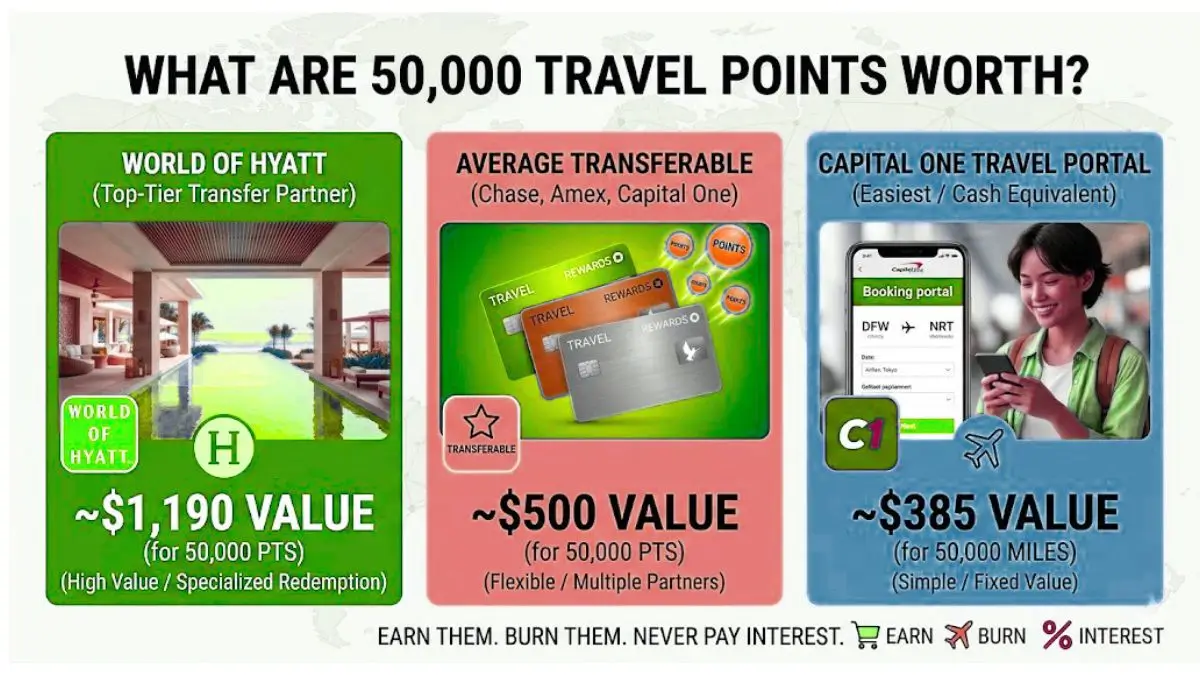
They average about $500. But the exact cash value depends completely on the bank and how you redeem them.
For example, 50,000 World of Hyatt points can fetch almost $1,190 in hotel stays. The exact same number of Capital One miles might only get you $385. To figure out your exact value, simply divide the cash price of your ticket by the number of points required.
What is the 2/3/4 rule for credit cards?
This is a strict limit Bank of America uses to control how many cards you can open. You can only get approved for 2 new Bank of America cards every 2 months, 3 every 12 months, and 4 every 24 months.
If you apply for a card that violates this timeline, the bank will automatically reject you. They might even approve the application initially, realize the error, and immediately cancel your new card.
What is the best rewards credit card for travelers?
The Chase Sapphire Preferred is widely considered the best overall choice for beginners and experts. It costs $95 a year. You earn 3 points per dollar on dining and 2 points on general travel.
If you want luxury perks like airport lounges, the American Express Platinum or Chase Sapphire Reserve are top contenders. The Sapphire Reserve carries a massive $795 annual fee. But it offers major value if you actually use the statement credits and transfer partners.
What is the biggest mistake to avoid with credit card points?
Hoarding them. Points lose value over time. Airlines constantly raise the number of miles required for a flight.
Holding 200,000 miles for five years guarantees you will lose purchasing power. Earn them and burn them. And never carry a balance. Paying a high interest rate just to earn a 2% travel reward is terrible math.